



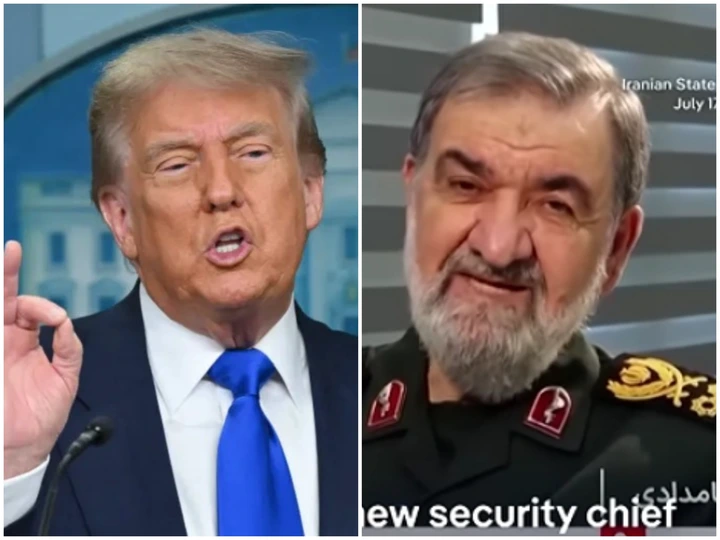
In a significant interview broadcast by PBS News on Tuesday, August 11, 2026, Brigadier General Mohammad Reza Naqdi, a high-ranking official serving as the Supreme Advisor to the Commander-in-Chief of Iran’s Islamic Revolutionary Guard Corps (IRGC), articulated a strong critique of the United States’ approach to its conflict with Iran. According to Naqdi, the U.S. initiated hostilities without a coherent, pre-defined strategy, evidenced by a frequent and seemingly arbitrary alteration of its stated war aims, which he claimed were revised every few days.
This candid assessment was delivered during a rare face-to-face conversation with PBS special correspondent Reza Sayah, held in Tehran. The IRGC, an organization that has been designated as a terrorist entity by Washington and numerous other nations, maintains a policy of almost complete avoidance of engagement with Western media outlets. Naqdi explained that his decision to grant this interview stemmed from Iran’s desire to directly communicate its perspective to the Western public, rather than solely addressing government officials.
Addressing the ongoing state of the conflict, Naqdi asserted that Iran had already successfully thwarted two of America’s primary strategic objectives: the purported aim of regime change within Iran and the objective of fragmenting the country. He characterized this failure on the part of the U.S. as a situation that forced Washington into a reactive stance, compelling them to constantly shift their tactical targets and public messaging. Naqdi cited specific examples of these shifting objectives, including reported threats to seize Iranian islands and to disrupt maritime traffic in the vital Strait of Hormuz.
Naqdi vividly described this lack of strategic direction, stating, “It became a war without a strategy. Every 2 or 3 days, they announced a new objective.” He elaborated on this point with concrete instances: “For several nights they said they want to invade Korg Island. They said they want to open the Strait of Hormuz. They mobilized their battleships. Everything they tried, we can show how we were victorious.”
While acknowledging that Iran had not yet achieved its ultimate long-term goals in the conflict, Naqdi remained resolute in his assertion that the country had, thus far, emerged victorious and expressed confidence that this trend would continue. He further posited that the protracted nature of the fighting had provided Iranian forces with invaluable, real-world combat experience against the U.S. military, a first of its kind. This direct engagement, he contended, had revealed previously unrecognized vulnerabilities within the American forces that Iran had not anticipated.
The comprehensive interview delved into a spectrum of critical issues, encompassing Iran’s advancements in missile production, the strategic importance and management of the Strait of Hormuz, Naqdi’s geopolitical views concerning Israel, and the potential implications of a U.S. nuclear strike. Key pronouncements from Naqdi regarding these matters can be found in the headline quotes from the segment at (00:01:41–00:01:48).

Discover more from Headline Hub
Subscribe to get the latest posts sent to your email.


