



Introduction
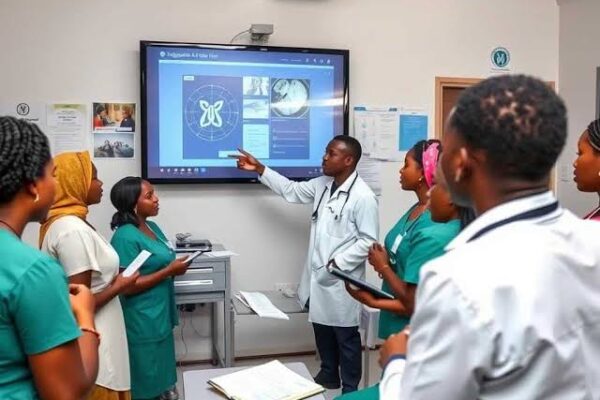
Artificial Intelligence (AI) is revolutionizing healthcare systems worldwide, and Nigeria is no exception. As Africa’s most populous nation with over 200 million people, Nigeria faces unique healthcare challenges—from doctor shortages and infrastructure gaps to the need for accessible, affordable care in remote areas. AI technologies are emerging as powerful tools to bridge these gaps and transform patient care across the country.
Current State of Healthcare in Nigeria
Nigeria’s healthcare system faces several critical challenges:
- Doctor-to-patient ratio: Approximately 1 doctor per 5,000 patients (WHO recommends 1:600)
- Brain drain: Thousands of Nigerian doctors practice abroad
- Infrastructure deficits: Many rural areas lack basic medical facilities
- Diagnostic delays: Limited access to specialists and advanced imaging
- Cost barriers: High out-of-pocket expenses for patients
How AI is Transforming Nigerian Healthcare
1. Telemedicine and Remote Consultations
AI-powered telemedicine platforms like Mobihealth International, Helium Health, and Reliance HMO are connecting patients in underserved areas with qualified doctors. These platforms use AI for:
- Intelligent triage and symptom checking
- Automated appointment scheduling
- Electronic health record management
- Prescription digitization and pharmacy integration
2. Medical Imaging and Diagnostics
AI algorithms are enhancing diagnostic capabilities in Nigerian hospitals:
- Radiology: AI-assisted interpretation of X-rays, CT scans, and MRIs
- Pathology: Automated analysis of tissue samples and blood smears
- Ophthalmology: Diabetic retinopathy screening using smartphone-based AI
- Tuberculosis detection: AI-powered analysis of chest X-rays for TB screening
3. Predictive Analytics and Disease Surveillance
Machine learning models are helping predict and track disease outbreaks:
- Malaria outbreak prediction using climate and mobility data
- Lassa fever surveillance and early warning systems
- COVID-19 contact tracing and hotspot identification
- Maternal health risk stratification for high-risk pregnancies
4. Drug Discovery and Personalized Medicine
Nigerian researchers are leveraging AI for pharmaceutical innovation:
- AI-driven drug repurposing for neglected tropical diseases
- Genomic analysis for personalized treatment protocols
- Traditional medicine validation using computational methods
- Clinical trial optimization and patient recruitment
5. Health Education and Chatbots
AI-powered chatbots and virtual assistants are improving health literacy:
- Multilingual health information (English, Hausa, Yoruba, Igbo, Pidgin)
- Maternal and child health guidance
- Medication adherence reminders
- Mental health support and counseling
Key Players in Nigeria’s AI Healthcare Ecosystem
| Organization | Focus Area | Key Innovation |
|---|---|---|
| Mobihealth International | Telemedicine | AI triage + video consultations across Africa |
| Helium Health | Hospital Management | EMR + AI analytics for hospital operations |
| 54gene | Genomics | African genomic data + AI for precision medicine |
| Wellvis | Health Information | AI symptom checker + COVID-19 triage tool |
| DrugStoc | Pharmaceutical Supply Chain | AI-powered inventory and demand forecasting |
| Redbird Health | Diagnostics | AI-enabled point-of-care testing |
Government Initiatives and Policy Support
The Nigerian government is increasingly recognizing AI’s potential in healthcare:
- National Digital Economy Policy and Strategy (2020-2030): Includes healthcare digitization
- Nigeria Data Protection Regulation (NDPR): Framework for health data privacy
- National Health Act (2014): Being updated to accommodate digital health
- NITDA’s AI Strategy: National Artificial Intelligence Strategy development
- Federal Ministry of Health: Digital health division establishment
Challenges and Barriers
Despite progress, significant challenges remain:
Infrastructure and Data
- Unreliable electricity and internet connectivity
- Fragmented health data systems and lack of interoperability
- Insufficient high-quality, locally relevant training data
- Limited cloud computing infrastructure
Regulatory and Ethical
- Evolving regulatory framework for AI medical devices
- Data privacy and patient consent concerns
- Algorithmic bias and representation of Nigerian populations
- Liability and accountability for AI-driven decisions
Human Capital and Adoption
- Shortage of AI/ML talent with healthcare domain expertise
- Resistance to change among healthcare professionals
- Need for continuous training and upskilling
- Cost of implementation for resource-constrained facilities
Success Stories and Case Studies
Case Study 1: AI-Powered TB Screening in Lagos
A partnership between the Lagos State Ministry of Health, Stop TB Partnership, and AI vendors deployed CAD4TB (Computer-Aided Detection for TB) software across 12 facilities. Results showed:
- 40% increase in TB case detection
- Reduced diagnosis time from weeks to hours
- Cost savings of approximately ₦150 million annually
Case Study 2: Maternal Health Chatbot in Northern Nigeria
An AI-powered WhatsApp chatbot providing antenatal guidance in Hausa reached over 50,000 pregnant women, resulting in:
- 25% increase in facility-based deliveries
- Improved adherence to antenatal visit schedules
- Early identification of high-risk pregnancies
Case Study 3: 54gene’s African Genomics Research
54gene has built the world’s largest African biobank, using AI to analyze genomic data for drug discovery. Their work has:
- Identified novel genetic variants relevant to African populations
- Partnered with global pharmaceutical companies
- Advanced precision medicine for diseases prevalent in Africa
Future Outlook: The Next 5-10 Years
Emerging Trends
- Federated Learning: Training AI models across hospitals without sharing patient data
- Edge AI: Running AI models on mobile devices for offline diagnostics
- Digital Twins: Virtual patient models for personalized treatment planning
- AI-Enabled Wearables: Continuous monitoring for chronic disease management
- Generative AI: Medical documentation, patient education, and research synthesis
Investment Landscape
Healthcare AI funding in Nigeria is growing:
- Venture capital investment in healthtech exceeded $200M in 2023
- International partnerships with Gates Foundation, WHO, World Bank
- Diaspora engagement and reverse brain drain initiatives
- University-industry collaborations (UI, UNILAG, Covenant, ABU)
Recommendations for Stakeholders
For Policymakers
- Develop clear regulatory pathways for AI medical devices
- Invest in national health data infrastructure and interoperability standards
- Create incentives for AI healthcare innovation and local talent retention
- Establish ethical guidelines for AI in healthcare
For Healthcare Providers
- Embrace continuous digital literacy training
- Participate in AI tool validation and feedback loops
- Advocate for patient-centered AI implementation
- Collaborate with tech partners on locally relevant solutions
For Entrepreneurs and Innovators
- Focus on solving uniquely Nigerian problems with global scalability
- Prioritize offline-first, low-bandwidth architectures
- Build trust through transparency, explainability, and community engagement
- Design for inclusion: language, literacy, cultural context
For Academia and Research
- Develop interdisciplinary AI + health curricula
- Create open datasets representing Nigerian populations
- Conduct implementation science research on AI adoption
- Foster international research collaborations
Conclusion
The rise of AI in Nigerian healthcare represents a transformative opportunity to leapfrog traditional infrastructure limitations and deliver quality care at scale. While challenges around infrastructure, regulation, and talent persist, the momentum is undeniable. Nigerian innovators, supported by progressive policies and growing investment, are building AI solutions that are not just imported technologies but locally rooted innovations addressing distinctly African health challenges.
As we look ahead, the convergence of AI with genomics, telemedicine, and digital health platforms promises a future where geography is no longer a determinant of health outcomes. The success of this transformation will depend on sustained collaboration between government, private sector, academia, and communities—ensuring that AI serves as a tool for equity, not exclusion.
Nigeria’s AI healthcare revolution is not just coming—it’s already here. The question is how quickly and inclusively we can scale it.
This article was published as part of Headline Hub’s coverage of technology and innovation in Nigeria’s healthcare sector. For more insights on digital health transformation, follow our Health Tech series.

Discover more from Headline Hub
Subscribe to get the latest posts sent to your email.